

Introduction
The Joint Biosecurity Centre (JBC), supported by The Alan Turing Institute and The Royal Statistical Society (RSS), was established in May 2020 to provide evidence-based and objective analysis, assessment, and advice to inform local and national decision-making in response to the COVID-19 pandemic. Its immediate-term objective was to break the chains of COVID-19 transmission and protect public health as part of the evolving health protection ecosystem in the UK. The JBC brought together world-leading epidemiological expertise and data science to deliver key insights into the drivers and risk factors of virus transmission. In October 2021, the JBC became part of the UK Health Security Agency (UKHSA).
The Challenge
Working alongside world-leading partners — including mathematicians from CERN, AI researchers from The Alan Turing Institute, epidemiologists, genomic sequencing SMEs, the NHS, the Office for National Statistics, and major technology providers — the JBC sought to identify the key drivers of COVID-19 transmission, understand localised infection spikes, and predict the impact on local healthcare systems.
COVID-19 surveillance and immunity studies

What We Did
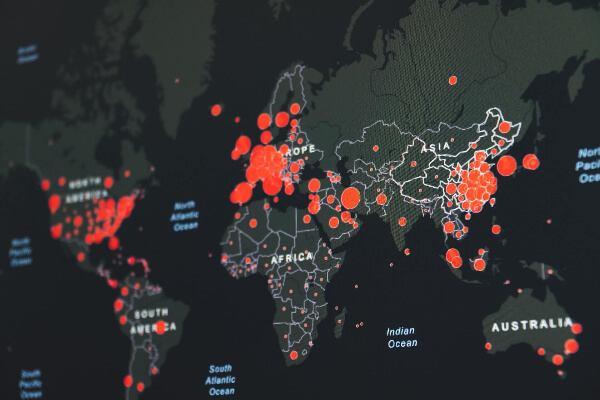
Our founder, Jillur Quddus, led a team of world-leading mathematicians, epidemiologists, AI research fellows, and technologists responsible for rapidly developing pioneering emerging infectious disease modelling systems. By combining statistical learning and discrete mathematics — including graph theory — with the latest advances in machine learning and artificial intelligence, our systems modelled the transmission of COVID-19 in near real-time and simulated the impact of non-pharmaceutical interventions (NPIs) such as lockdowns.
Enduring SARS-CoV-2 prevalence risk factors
Key Outcomes
Our innovative mathematical models enabled the Scientific Advisory Group for Emergencies (SAGE) to identify both known and emerging outbreak clusters, understand the key drivers of transmission within and between localised clusters, and predict the likely impact of NPIs. Governed by the architectural principles of vendor-agnosticism, interoperability, reusability, and extensibility, our solutions can be seamlessly reused and adapted by the UKHSA in response to future pandemics.